What the Emptiness Holds: Five Landscapes Where Absence Speaks Louder Than Any Monument

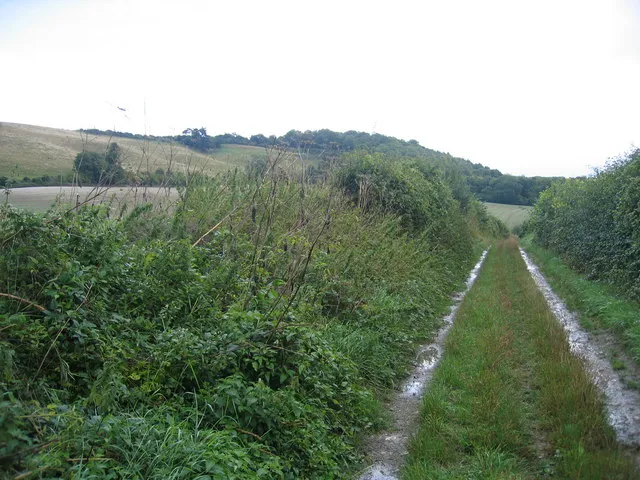
Photo: Korean DMZ misty landscape wildlife border zone, via i.pinimg.com
Most travelers are trained to seek out presence. The cathedral, the ruin, the market square humming with vendors—these are the landmarks that fill guidebooks and Instagram grids. Yet some of the most demanding and rewarding journeys available to the curious traveler involve landscapes that offer almost nothing to photograph, and almost everything to understand. These are places where the absence of human construction is itself the primary text, and where learning to read that emptiness requires patience, historical literacy, and a willingness to sit with discomfort.
The Five Continents Project has spent considerable time examining what the world's blank spaces reveal about the civilizations that surround them. What follows is a close reading of five such landscapes—each one shaped by a different force, each one teaching a different lesson.
The Korean Demilitarized Zone: A Border That Became a Sanctuary
The DMZ separating North and South Korea stretches approximately 160 miles across the peninsula and measures roughly 2.5 miles wide. It is one of the most heavily armed borders on Earth. It is also, paradoxically, one of the most biodiverse corridors in all of Asia.
Because no human being has farmed, developed, or even casually walked through most of this strip for more than seven decades, the land has quietly rewilded itself. Amur leopard cats, Asiatic black bears, and red-crowned cranes—species under pressure almost everywhere else on the continent—have found refuge in a place defined entirely by political violence and military standoff.
For American travelers, the DMZ offers a jarring kind of double vision. Observation platforms on the South Korean side allow visitors to peer across a landscape that appears almost pastoral, even idyllic from a distance. The lesson it delivers is unsettling: ecological recovery, in this instance, required human catastrophe as its precondition. The absence here is not peaceful. It is the product of unresolved conflict, and the wildlife thriving within it exists in a space that was never intended as sanctuary.
The Chernobyl Exclusion Zone: Contamination as Conservation
In north-central Ukraine, a 1,000-square-mile exclusion zone surrounds the site of the 1986 nuclear disaster at Chernobyl. Tens of thousands of people were evacuated. The towns they left behind—Pripyat most famously—have been slowly consumed by forest and vegetation for nearly four decades.
What makes this landscape philosophically complex is the nature of the absence. The zone is not pristine. It is radioactively contaminated in ways that scientists are still working to fully understand. And yet wolf populations have surged, lynx have returned, and wild horses introduced in the 1990s now roam freely through abandoned collective farms.
Travelers who visit on licensed tours—the only legal way to enter—frequently report a disorientation that no other destination produces. The emptiness here is not natural; it was engineered by disaster. But the land's response to that emptiness has been vigorous and, in its own strange way, instructive. What Chernobyl teaches is that nature does not require human absence to be ideal—it merely requires that humans stop actively preventing recovery.
The Sonoran Desert's Unbuilt Borderlands: Migration Routes and the Silence of the Disappeared
Along the US-Mexico border in southern Arizona, vast stretches of the Sonoran Desert remain largely undeveloped—not because they are protected wilderness, but because the terrain is simply too hostile for most construction. These are the same corridors through which hundreds of thousands of migrants have attempted to cross, and through which thousands have died.
Humanitarian organizations such as No More Deaths have documented the trails, water stations, and makeshift camps that mark these routes. The landscape holds an archive of objects—discarded shoes, rosaries, photographs—that constitute a kind of material testimony to movement and suffering.
For American travelers, this particular absence carries a direct moral weight that landscapes on other continents do not. The emptiness of the Sonoran borderlands is not distant history. It is ongoing. Learning to read this landscape means confronting the policy choices, economic forces, and enforcement priorities that have made these corridors both necessary and lethal. The silence here is political in the most immediate sense.
The Loess Plateau, China: Restoration Written Into the Hillside
In the 1990s, the Loess Plateau in north-central China was among the most severely eroded landscapes on the planet. Centuries of overgrazing and agricultural pressure had stripped the hills bare, leaving a dusty, nearly lifeless expanse. Then, over roughly two decades, one of the largest ecological restoration projects in human history transformed approximately 35,000 square miles of degraded land.
Today, travelers who visit the plateau encounter something unusual: a landscape in the active process of becoming. The terraced hillsides, reforested slopes, and restored river systems are not ancient—they were engineered within living memory, by deliberate human intervention. The absence of the old degradation is itself the story.
What the Loess Plateau offers that few other destinations can match is a visible record of intentional ecological choice. The emptiness that was there—the bare, eroded silence of a landscape stripped of productivity—has been replaced by a different kind of quiet: the slow, accumulating presence of recovery.
The Cerrado, Brazil: The Savanna That Wasn't Supposed to Survive
Brazil's Cerrado, the vast tropical savanna that covers roughly 20 percent of the country's landmass, has lost more than half of its original vegetation to agricultural expansion. The portions that remain—particularly in indigenous territories and protected reserves—exist as islands of biological complexity in a sea of monoculture.
Visiting the intact Cerrado is an exercise in understanding what is no longer there. The landscape does not announce itself dramatically. Its trees are gnarled and low, its grasses dry and golden during the dry season. First-time visitors accustomed to the Amazon's theatrical density often find it underwhelming. But the Cerrado hosts more species of plants than the entire European continent, and the silence of its intact stretches—when compared to the industrial agriculture surrounding them—is a silence that speaks volumes about what has been lost everywhere else.
Learning to Read What Isn't There
These five landscapes share a common demand: they require travelers to bring their own interpretive frameworks. There is no monument to stand before, no plaque to read, no performance to observe. The DMZ, the exclusion zone, the desert borderlands, the restored plateau, the embattled savanna—each one rewards the traveler who arrives prepared to ask not only what happened here, but what is still happening, and what choices, made by governments and communities and individuals, have produced the particular quality of emptiness that now defines the place.
For travelers based in the United States, where landscape is so often packaged as scenery and marketed as backdrop, these destinations offer something genuinely different: the experience of a landscape as argument. The absence is not neutral. It is always the product of something—conflict, catastrophe, policy, or the slow, patient work of restoration. Learning to read it is one of the more demanding and rewarding skills a traveler can develop.