Off the Official Map: The Hidden Corridors Connecting Artists, Pilgrims, and Wanderers Across Continents
Open any major travel booking platform and you will find the same geography: hub airports, starred hotels, curated experience packages, and routes that funnel visitors through the same dozen cities in any given country. This infrastructure is real and useful, but it represents only one layer of how human beings actually move across the earth.
Beneath it — sometimes intersecting with it, sometimes running in deliberate parallel — lies a different kind of geography. It is made of residency programs in converted factories, spiritual pathways that cross national borders without official designation, trade networks that predate the nation-states they now thread through, and informal hospitality chains that connect people who have never met through webs of mutual trust. The people who navigate this geography are not trying to avoid the world. They are trying to access parts of it that the official map does not show.
The West African Griot Circuit: Cultural Knowledge on the Move
Along the Atlantic coast of West Africa and extending through the diaspora communities of Europe and North America, a circuit of griots — hereditary oral historians, musicians, and cultural custodians — maintains a network of exchange that has functioned, in various forms, for centuries.
In its contemporary manifestation, the griot circuit operates through festival invitations, family connections, and an informal economy of cultural performance. A griot from Senegal may travel to The Gambia for a naming ceremony, then to Paris for a diaspora cultural event, then to Brooklyn for a community gathering organized by West African immigrants. At each stop, knowledge is exchanged, relationships are reinforced, and the living archive of oral history is updated.
For American travelers with connections to West African communities, or simply with the curiosity to seek out these events, the griot circuit offers an encounter with a form of cultural infrastructure that predates and in many ways outlasts the tourist economy. Organizations like the African Music Festival network and diaspora cultural centers in cities like New York, Atlanta, and Minneapolis serve as entry points for those seeking genuine engagement.
What makes this corridor significant is not only its cultural content but its function as a real-time link between the African continent and its global diaspora — a living corrective to the idea that culture flows only from the Global North outward.
The Residency Underground: Artists Moving Between Margins
In a former textile mill in Lodz, Poland, a Kenyan painter is working on a series of canvases that draw on both Kikuyu visual traditions and Soviet-era industrial aesthetics. She arrived through a residency program that does not appear in any major arts publication. She learned about it from a Mexican sculptor she met at a residency in Oaxaca, who heard about it from a Lebanese filmmaker at a program in Beirut.
This is the residency underground: a global network of artist residency programs, many of them small, underfunded, and operating outside the visibility of major arts institutions, that collectively constitute one of the most significant channels of cross-cultural exchange in the contemporary world. Programs like these exist on every continent — in rural Argentina, in post-industrial cities in Eastern Europe, in converted fishing villages in Southeast Asia, in desert communities in sub-Saharan Africa.
For American artists, particularly those early in their careers, this network represents an alternative to the highly competitive and often cost-prohibitive world of major institutional residencies. Organizations like ResArtis maintain partial directories, but much of the network operates through word of mouth, sustained by the artists who have passed through it.
The cultural output of this underground is difficult to quantify, but its effects are visible in contemporary art that refuses easy geographic categorization — work that carries within it the residue of unexpected encounters, of aesthetic traditions meeting across distances they were never supposed to bridge.
The Hajj Feeder Routes: Pre-Colonial Pathways Still in Use
The annual Hajj pilgrimage to Mecca draws millions of Muslims from across the world, and its major air routes are among the most trafficked in global aviation. But embedded within and alongside this official pilgrimage infrastructure are older pathways — overland and maritime routes that predate commercial aviation by centuries — that continue to carry pilgrims, traders, and travelers through landscapes the airline map never touches.
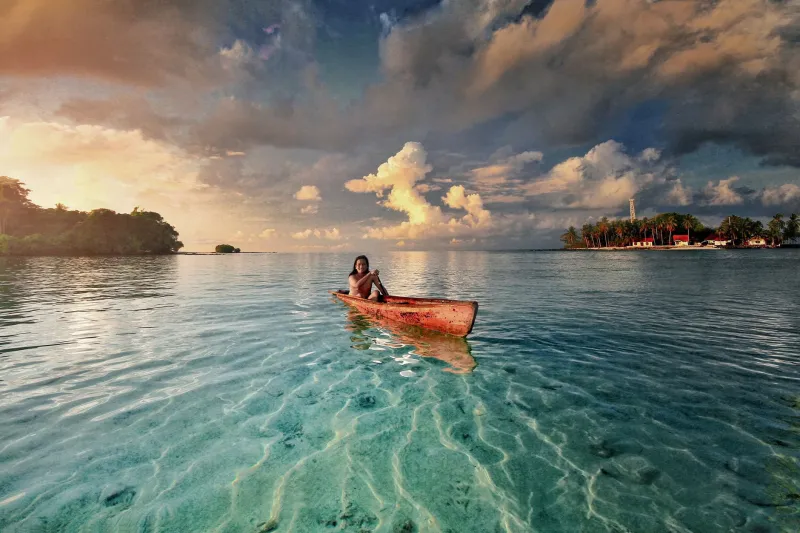
From West Africa, the trans-Saharan routes that carried pilgrims to Mecca for over a millennium still see movement, though today that movement is complicated by political instability across the Sahel. From Southeast Asia, maritime routes through the Indian Ocean connect Indonesian and Malaysian pilgrims to ports along the Arabian Peninsula through networks of boat owners and coastal communities that have maintained these connections across generations.
These routes are not primarily about avoiding the official pilgrimage infrastructure. For many who use them, the journey itself is part of the spiritual practice — a form of extended devotion that the direct flight cannot replicate. For researchers and travelers interested in the intersection of faith, geography, and informal economy, these corridors offer a window into how religious practice shapes human movement at a scale that rarely appears in standard travel writing.
American Muslims with family connections to West Africa or Southeast Asia may already have relatives who have traveled these routes. For others, organizations focused on Islamic heritage travel can provide context and, in some cases, guided access to portions of these historic pathways.
The Andean Knowledge Exchange: Healing Traditions Crossing Borders
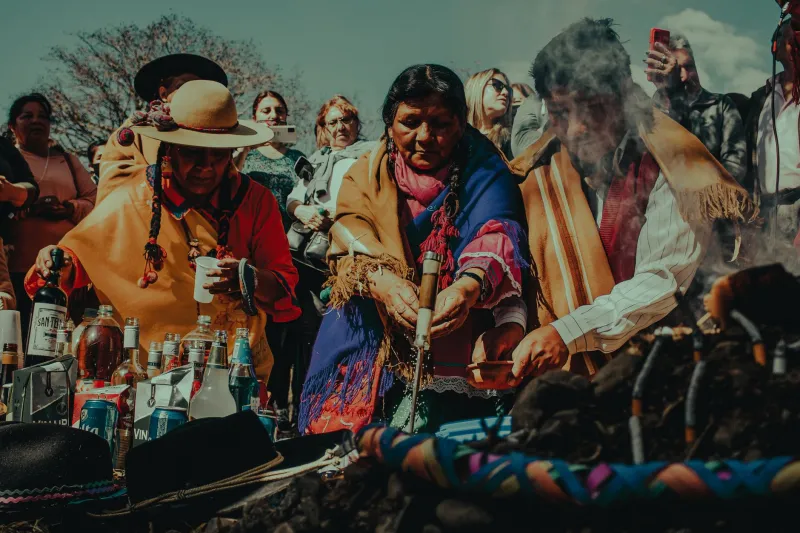
Across the Andean highlands of Peru, Bolivia, Ecuador, and Colombia, a network of traditional healers — curanderos, yatiris, and plant medicine specialists — maintains channels of exchange that operate largely outside formal medical or tourism infrastructure. Practitioners travel between communities for ceremonies, consultations, and the exchange of botanical knowledge. Seekers, including a growing number of Americans and Europeans, navigate toward these networks through personal referrals and community connections.
This corridor has become more visible in recent years as interest in plant medicine traditions — particularly ayahuasca — has grown in the United States and Europe. But the network itself is far older than the current wave of Western interest, and it is considerably more complex. It encompasses not only ceremonial practice but agricultural knowledge, textile traditions, and systems of reciprocal exchange that connect highland and lowland communities across vast distances.
The commercialization of this network presents genuine ethical challenges. When traditional knowledge becomes a product for export, the communities that hold it often benefit least from the transaction. Responsible engagement requires working through organizations with demonstrated community accountability, and approaching these traditions with the humility appropriate to entering a knowledge system one does not fully understand.
The Southeast Asian Backpacker Circuit's Invisible Layer
The well-documented backpacker trail through Southeast Asia — Bangkok, Chiang Mai, Luang Prabang, Hanoi, Hoi An — is one of the most traveled informal routes in the world. But running alongside it, largely invisible to first-time visitors, is a network of connections maintained by long-term travelers, expatriate artists, local fixers, and community organizers who have built a different kind of infrastructure in the gaps between tourist sites.
This layer includes community-based guesthouses run by ethnic minority families in northern Laos and Vietnam's Central Highlands, informal arts spaces in Phnom Penh and Yogyakarta, and networks of social entrepreneurs connecting travelers with community development projects that need skills rather than donations. It is accessed not through apps but through conversations — with the right guesthouse owner, the right local guide, the right fellow traveler who has been moving through the region for years.
For American travelers willing to slow down and ask different questions, this invisible layer offers something the standard circuit cannot: genuine reciprocity. The exchange is not between consumer and experience provider, but between people with different knowledge and different needs, moving through the same landscape in search of the same fundamental thing — a real encounter with a world larger than the one they already know.
Finding the Other Map
The corridors described here share a common quality: they are sustained by trust rather than transaction, by relationship rather than reservation. They exist because human beings have always needed to move, to exchange, to find one another across distances that official geography makes to seem impassable.
For travelers shaped by the Five Continents Project's commitment to genuine cultural engagement, these routes are not alternatives to responsible tourism. They are its most demanding form — requiring patience, humility, and a willingness to be guided by people who know the terrain far better than any guidebook. The map that results from that kind of travel is one you draw yourself, one encounter at a time.