Roads Worn Holy: Five Pilgrimage Routes That Quietly Built the Modern World
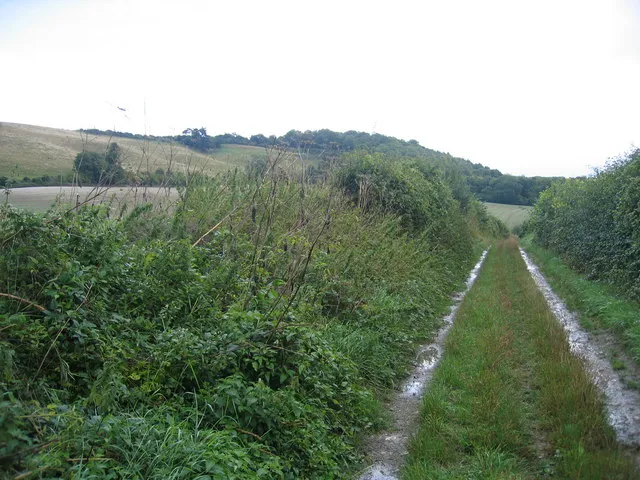
Photo: Pip Rolls, CC BY-SA 2.0, via Wikimedia Commons
There is a particular kind of infrastructure that never appears in economic histories but may have shaped the human story more profoundly than any trade agreement or railroad line. It is built not by governments but by belief — worn into the earth by millions of feet over centuries, maintained not through taxation but through devotion. Pilgrimage routes are, in the most literal sense, the world's oldest networks. And what traveled along them was never only faith.
1. The Camino de Santiago: Europe's First Cultural Exchange Highway
The Camino de Santiago — the network of routes converging on the Cathedral of Santiago de Compostela in northwestern Spain — is today one of the world's most walked long-distance trails, attracting upward of 400,000 registered pilgrims annually. But its significance to the cultural architecture of medieval Europe is rarely discussed with the same enthusiasm as its scenic appeal.
Between the ninth and fifteenth centuries, the Camino functioned as medieval Europe's most reliable conduit for the movement of people, goods, and ideas across the continent. Pilgrims traveling from France, Germany, England, and Portugal passed through dozens of towns along established routes, and those towns grew wealthy and cosmopolitan in response. The architectural tradition known as Romanesque — the rounded arches, barrel vaults, and sculptural programs that define so many European churches — spread largely along Camino corridors, as stonemasons, craftsmen, and architects traveled from project to project along the pilgrimage road.
Musical exchange was equally significant. The Codex Calixtinus, a twelfth-century manuscript held in Santiago's cathedral archive, contains some of the earliest polyphonic music in European history — compositions gathered from pilgrim traditions across the continent and preserved in a single volume. Scholars now regard the Codex as evidence that the Camino was, among other things, a musical transmission belt.
Contemporary pilgrims walking the Camino Francés, the most popular of the routes, may not be thinking about Romanesque vaulting as they cross the Pyrenees. But they are, whether they know it or not, tracing a path that assembled much of what we recognize as Western European culture.
2. The Hajj Routes of the Arabian Peninsula: Commerce in the Shadow of the Sacred
The annual Hajj to Mecca — obligatory for every Muslim who is physically and financially able to undertake it — is the largest annual human gathering on Earth, drawing between two and three million pilgrims in a single week. But for more than a millennium before the age of air travel, the routes leading to Mecca from across the Islamic world were among the most economically productive corridors in history.
The great Hajj caravans that departed annually from Cairo, Damascus, and Baghdad were not merely religious processions. They were, effectively, mobile markets. Merchants from West Africa carried gold and kola nuts. Traders from Central Asia brought silk and horses. Scholars transported manuscripts, and those manuscripts — copied, shared, and debated along the route — spread legal, philosophical, and scientific ideas across a geographic arc stretching from Senegal to Indonesia.
The city of Mecca itself, and the surrounding Hejaz region, developed an extraordinarily sophisticated hospitality and logistics infrastructure to manage the annual influx — an infrastructure that some historians argue was the prototype for modern mass tourism. Ibn Battuta, the fourteenth-century Moroccan traveler whose journeys covered roughly 75,000 miles, used Hajj caravans as his primary long-distance transport system, joining and departing them as his itinerary required. The routes were that reliable, that well-supplied, and that cosmopolitan.
3. The Kumbh Mela Circuits: Where Astronomy Organized a Continent
The Kumbh Mela, held on a rotating schedule at four sacred river sites across northern India — Prayagraj, Haridwar, Nashik, and Ujjain — is determined by the positions of Jupiter, the Sun, and the Moon. This astronomical precision is not incidental. It reflects the degree to which the Kumbh Mela has, for at least two millennia, served as a coordinating mechanism for a civilization of continental scale.
At its largest iteration, the Maha Kumbh Mela at Prayagraj, attendance has exceeded 100 million visitors over a six-week period — a logistical achievement that modern urban planners study with genuine admiration. But the historical function of the Kumbh Mela circuits extended well beyond religious bathing. They were the occasion for the largest recurring gathering of scholars, physicians, merchants, and political representatives in pre-modern South Asia.
Ayurvedic medical knowledge spread through Kumbh Mela gatherings, as practitioners from different regional traditions exchanged formulas and techniques. Sanskrit philosophical debates conducted at the Mela during the classical period produced texts that shaped Indian intellectual life for centuries. And the economic activity generated by millions of pilgrims traveling to and from the sites sustained entire networks of towns, ferries, and artisan communities along the Ganges and Godavari river valleys.
4. The Way of the Bodhisattvas: Buddhist Pilgrimage Across Central Asia
The network of Buddhist pilgrimage sites stretching from the Ganges plain through the mountain passes of Central Asia to China and Japan represents one of the most consequential cultural transmission corridors in history. Between the first and ninth centuries CE, Buddhist monks and pilgrims traveling between India, China, and the kingdoms of Central Asia carried with them not only sacred texts but papermaking techniques, mathematical concepts, musical instruments, and artistic traditions that fundamentally altered the civilizations they passed through.
The Chinese monk Xuanzang, whose seventh-century journey to India in search of Buddhist scriptures inspired the classic novel Journey to the West, returned with 657 texts that were subsequently translated into Chinese and distributed throughout East Asia. His account of the journey, the Great Tang Records on the Western Regions, also provided the most detailed geographical description of Central Asia and South Asia available to Chinese scholars for centuries — making it simultaneously a religious document and a geographical survey of enormous practical value.
The artistic traditions carried along these routes produced some of the most recognizable cultural artifacts of the ancient world. The Gandharan sculpture style — which fused Hellenistic figure-modeling techniques with Buddhist iconography — emerged precisely at the intersection of these pilgrimage networks in what is now Pakistan and Afghanistan. Its influence can be traced from the Mediterranean to the Korean peninsula.
5. El Camino Real de Tierra Adentro: The Silver Road and Its Hidden Legacies
Less celebrated than its Spanish namesake but no less historically significant, the Camino Real de Tierra Adentro — the Royal Road of the Interior — ran roughly 1,600 miles from Mexico City north through the Chihuahuan Desert to what is now Santa Fe, New Mexico. Established in the sixteenth century primarily to transport silver from the mines of Zacatecas to the colonial capital, the route also carried missionaries, soldiers, and settlers northward and, crucially, carried Indigenous knowledge, craft traditions, and biological materials in both directions.
The chile pepper traveled this road. So did the cultivation techniques for corn and squash that transformed Spanish colonial agriculture. Tlaxcalan communities, allied with the Spanish crown after the conquest of the Aztec Empire, established towns along the Camino Real that maintained distinct cultural identities for generations, effectively creating a corridor of cultural negotiation rather than simple colonial imposition.
For American travelers in the Southwest, the Camino Real is unusually accessible. It is a designated UNESCO World Heritage Site, and its trace can be followed through New Mexico and Texas with relative ease. The communities along its route — many of them still inhabited by the descendants of the people who built and maintained the road — offer a living record of the exchanges, forced and voluntary, that the route made possible.
The Pilgrim's Paradox
What these five routes share is a paradox at the heart of sacred travel: the journey undertaken for purely spiritual reasons consistently generates consequences that are entirely worldly. Art movements, trade networks, scientific exchanges, and political transformations have all, at various points in history, been carried forward by people who believed they were simply trying to get closer to God, or to enlightenment, or to the source of a sacred river.
The traveler who walks these routes today inherits all of that history — whether or not they are aware of it. And perhaps that unawareness is itself part of the tradition. The pilgrims who carried polyphonic music across the Pyrenees were not thinking about musicological history. They were thinking about Santiago. The journey did the rest.