Overhead, Another World: Five Civilizations That Wrote Entirely Different Stories in the Stars
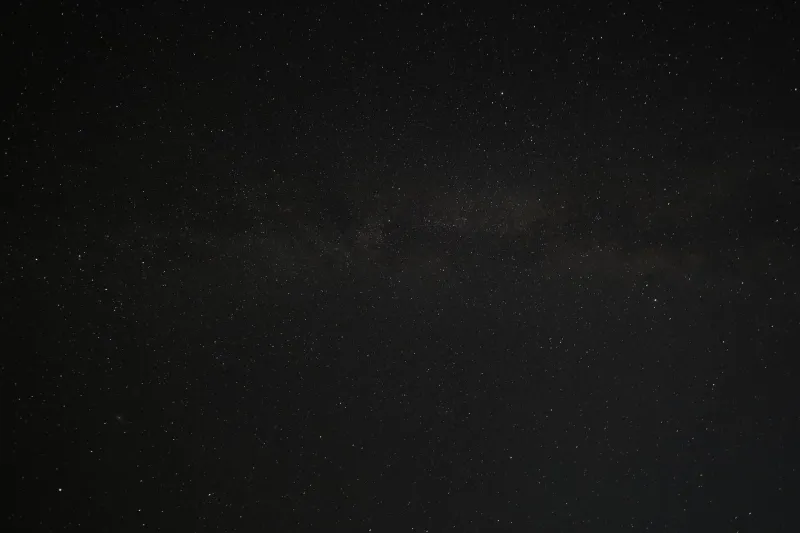
On a clear night far from city lights—in the high desert of New Mexico, or on a boat crossing the Gulf of Mexico, or in a national park in Utah where the Milky Way arcs overhead like a spilled river—the American traveler encounters the same sky that has been watched by human beings for as long as there have been human beings. The stars do not change. What changes, profoundly and revealingly, is the story we tell about them.
The constellations that appear in American school textbooks—Orion, the Big Dipper, Cassiopeia—are the legacy of a specific tradition: Greek astronomical mythology, transmitted through Roman texts, formalized by the Alexandrian astronomer Ptolemy, and inherited by European and eventually American culture as though it were the only possible way to read the sky. It is not. Across five continents, other civilizations drew entirely different figures across the same stars, embedded them in entirely different narratives, and used them to navigate, plant, mourn, celebrate, and understand their place in the cosmos. Each of these traditions is a complete and sophisticated system. Each one reveals that geography quite literally shapes how humans understand the universe.
The Marshall Islands: Navigating by a Sky That Moves
For the master navigators of the Marshall Islands—a scattered archipelago of atolls in the central Pacific Ocean—the night sky was never primarily a source of mythology. It was a map, and a remarkably precise one. Marshallese traditional navigation, which enabled open-ocean voyaging across thousands of miles of featureless water in outrigger canoes, depended on a sophisticated understanding of star paths: the arcs traced by individual stars as they rose and set over the course of a night.
Unlike the Western tradition, which groups stars into fixed pictorial constellations, Marshallese stellar knowledge is organized around movement. The navigator does not ask what shape do these stars form? but where does this star rise, and where does it set, and what island lies along that line? Stars are named not for mythological figures but for their navigational utility—for the islands they lead to, the seasons in which they appear, the wave patterns they accompany.
Contemporary efforts to revive this knowledge—led in part by the Polynesian Voyaging Society and by Marshallese cultural educators—have brought traditional star navigation back into practice aboard reconstructed traditional vessels. For travelers who join one of the growing number of cultural sailing programs in the Pacific, the experience of navigating by a Marshallese star map is a genuine cognitive reorientation: the sky becomes not a ceiling decorated with figures but a living, moving instrument.
The Lakota: A Sky That Mirrors the Earth Beneath It
For the Lakota people of the Great Plains—whose ancestral territory spans what is now South Dakota, Nebraska, Wyoming, and Montana—the relationship between the night sky and the landscape below it is not metaphorical. It is structural. Lakota astronomical tradition, as documented by ethnoastronomer Ronald Goodman in his foundational work Lakota Star Knowledge, describes a direct correspondence between the positions of key stars and specific sacred sites on the earth.
The Black Hills, in particular, are understood in Lakota cosmology as a terrestrial mirror of a celestial pattern. The star formation that Western astronomy calls the constellation Scorpius corresponds, in Lakota tradition, to a specific configuration of sacred sites within the Hills. This is not a loose poetic association—it is a precise and functional mapping system that guided seasonal movement, ceremonial timing, and the placement of encampments.
For American travelers visiting the Black Hills today—a landscape already charged with political and cultural significance as contested territory between the Lakota Nation and the federal government—understanding this astronomical tradition adds a dimension that no conventional travel guide provides. The hills are not simply scenic. They are, within the Lakota worldview, a point where sky and earth touch.
Ancient Egypt: A Sky Built for the Dead
Egyptian astronomical tradition is perhaps the most architecturally ambitious stellar knowledge system ever produced. The alignment of the three pyramids at Giza with the three stars of Orion's belt—a correspondence first proposed by researcher Robert Bauval in the early 1990s and subsequently debated, refined, and partially accepted within Egyptology—is only the most famous example of a much broader practice: the deliberate orientation of sacred structures toward specific celestial events.
But the deeper insight lies not in the architecture but in the theology. For ancient Egyptians, the night sky was not a neutral backdrop for navigation or timekeeping. It was the realm of the dead—specifically, the circumpolar stars that never set below the horizon were identified as the imperishable ones, the souls of the righteous dead who had achieved eternal life. The Milky Way was the celestial Nile, the river of the afterlife along which the solar barque of Ra traveled each night.
Egyptian star maps, preserved on the ceilings of tombs in the Valley of the Kings near Luxor, are not scientific instruments in the modern sense. They are cosmological declarations—statements about the relationship between human life, divine order, and the structure of time. The sky, in Egyptian understanding, was not above the human world. It was continuous with it, and the stars were not distant suns but the permanent addresses of the beloved dead.
The Aboriginal Australians: Reading the Dark, Not the Light
Of all the stellar traditions examined here, the astronomical knowledge of Aboriginal Australians is perhaps the most conceptually radical from a Western perspective—because it is organized not around the stars themselves but around the dark spaces between them.
In the night sky visible from the Southern Hemisphere—dramatically different from the sky seen by most Americans, and featuring the Milky Way in particularly dense and vivid form—Aboriginal Australians across dozens of distinct cultural groups identified figures formed by the dark nebulae: clouds of interstellar dust that block the light of background stars and create dark shapes against the bright band of the galaxy. The Emu in the Sky, one of the most widely recognized of these dark constellation figures, is formed by a sequence of dark patches running from the Southern Cross through the length of the Milky Way.
The Emu's position in the sky corresponds with precision to the seasonal behavior of emus on the ground below. When the Emu in the Sky lies horizontal near the horizon in autumn, emus are laying eggs. When it rises vertically in spring, the eggs have hatched. This is not coincidence—it is the product of generations of careful empirical observation, encoded in a narrative system that makes the sky a seasonal calendar of extraordinary accuracy.
For travelers visiting Australia's dark-sky sites—including the Warrumbungle National Park in New South Wales, the first designated Dark Sky Park in the Southern Hemisphere—Aboriginal-led astronomy tours are increasingly available and offer an experience that reframes the entire act of looking up.
The Maya: A Sky That Counts
Mayan astronomical achievement is well documented and widely celebrated, yet it is frequently reduced, in popular accounts, to the dramatic fact of the Long Count calendar and its misinterpreted 2012 endpoint. The more profound achievement is the one that underlies the calendar: an extraordinarily precise observational astronomy developed over centuries, without telescopes, that tracked the movements of Venus, Mars, Jupiter, and the sun with an accuracy that rivals modern calculations.
But Mayan stellar knowledge was not merely computational. It was deeply mythological and inseparable from a cosmology in which time itself was a living, cyclical force inhabited by specific divine personalities. The Dresden Codex—one of only four surviving pre-Columbian Mayan books, held today in Dresden, Germany—contains Venus tables of such precision that scholars use them to verify the accuracy of modern astronomical software.
For travelers exploring the ancient sites of the Yucatán Peninsula in Mexico or the highlands of Guatemala, the astronomical orientation of structures like El Castillo at Chichén Itzá—where the spring and autumn equinoxes produce a shadow pattern that creates the illusion of a serpent descending the pyramid's staircase—transforms the ruins from passive archaeological objects into active instruments. The Mayan sky was not a backdrop. It was a clock, a scripture, and a government.
Looking Up, Looking In
What these five traditions share is not a method but a conviction: that the sky is not empty. Every civilization that has turned its face upward has found there a reflection of its own deepest concerns—its dead, its crops, its gods, its journeys, its sense of time. The stars themselves are indifferent to these interpretations. But the interpretations are anything but arbitrary. They are, each one, a complete account of what it means to be human in a particular place on this particular planet—and that, for any traveler willing to look up, is reason enough to learn them.