Every Dish Has a Passport: Tracing the Migrant Histories Hidden in Five Regional Cuisines
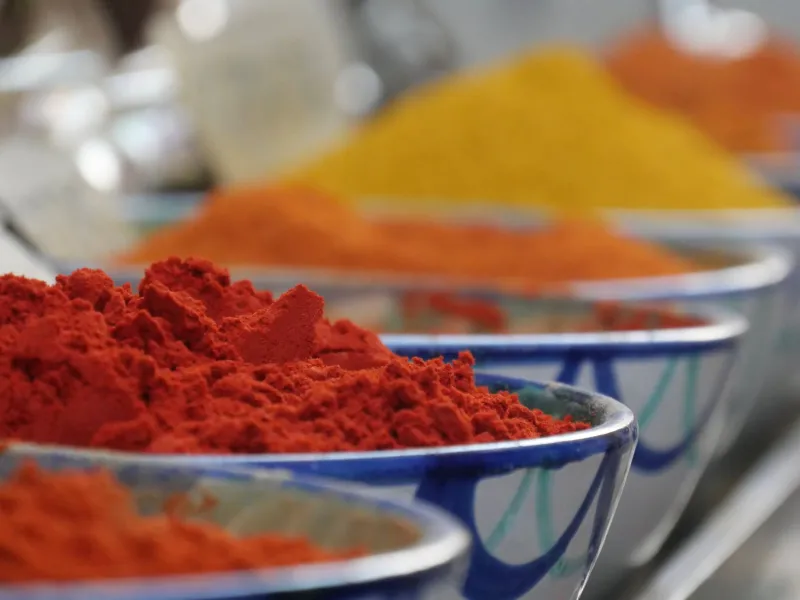
Ask most Americans what they consider authentic Italian food and they will likely mention tomato sauce. Ask them what defines Thai cuisine and they will almost certainly mention chili heat. Ask about Indian cooking and turmeric, chili, and rich curries come to mind. These associations feel natural — obvious, even. They are also, in historical terms, relatively recent. The tomato is a New World crop that did not reach Italy until the sixteenth century. The chili pepper arrived in Southeast Asia via Portuguese trade routes around the same period. Many of the spice combinations we associate with subcontinental cooking were shaped by centuries of Arab, Mughal, and later British influence.
The food on our plates is an archive. And like most archives, it is more complicated — and more interesting — than the official story suggests.
Italy: The New World on a Roman Plate
Italian cuisine is among the most beloved and widely recognized in the United States, in part because of the enormous Italian immigrant community that helped shape American food culture from the late nineteenth century onward. It is commonly understood as ancient, Mediterranean, rooted. And in many respects it is. Olive oil, bread, wine, cured meats — these have genuinely deep roots in the Italian peninsula.
But the tomato? It arrived from the Americas following European contact with the New World, and it was viewed with suspicion for generations. Early European botanists classified it as potentially poisonous, a relative of deadly nightshade. It took more than a century for the tomato to become a culinary staple in southern Italy, and another century beyond that for tomato-based sauces to become what many Americans now consider the defining feature of Italian cooking.
Polenta, another Italian staple often associated with northern regional tradition, is made from maize — also a New World crop. The Italian cuisine Americans revere as timeless carries, in its very ingredients, the fingerprints of transatlantic exchange.
Thailand: Portuguese Peppers and the Reinvention of Heat
Thai food is celebrated globally for its fiery intensity, and the chili pepper is so central to that identity that it is difficult to imagine the cuisine without it. Yet before Portuguese traders introduced Capsicum species to Southeast Asia in the late 1400s and early 1500s, Thai cooking achieved its heat through other means — long pepper, ginger, galangal, and similar aromatics.
The chili was adopted with extraordinary speed and creativity. Within a few generations, it had been integrated so thoroughly into Thai culinary tradition that it became definitional. The Portuguese, who were simultaneously introducing chili peppers across Africa, India, and East Asia as part of their maritime trade network, arguably did more to reshape global flavor profiles than any other single colonial power — largely through a single ingredient.
This is not to diminish the sophistication of Thai cuisine, which involves complex technique, regional variation, and centuries of refinement. It is to observe that what feels indigenous often reflects a cosmopolitan history of absorption and transformation.
West Africa: The Diaspora That Shaped a Continent's Table
West African cuisine — encompassing the food traditions of Nigeria, Ghana, Senegal, Côte d'Ivoire, and neighboring nations — is among the most influential on Earth, though it is rarely credited as such in mainstream American food media. The African culinary diaspora, carried violently across the Atlantic through the transatlantic slave trade, shaped the food cultures of the American South, the Caribbean, and Brazil in ways that are only now receiving sustained scholarly and popular attention.
Rice cultivation in coastal South Carolina and Georgia, for instance, was not simply adopted from European farming practice. It was introduced and sustained by enslaved people from rice-growing regions of West Africa — particularly the area known historically as the Rice Coast — who brought technical knowledge that European planters neither possessed nor fully understood. Dishes like gumbo carry direct lineage to West African okra-based stews. Hoppin' John traces to similar legume-and-rice combinations found across the Sahel.
Meanwhile, West African cuisine itself absorbed New World crops — cassava, maize, and peanuts among them — with such completeness that these ingredients now appear foundational to the region's food identity. Peanut stew, a dish central to Senegalese and Ghanaian cooking, relies on a legume that originated in South America.
The exchange was not voluntary. But the culinary transformation it produced was real, and its legacy deserves honest acknowledgment.
Peru: The Most Biodiverse Kitchen on Earth
Peruvian cuisine has emerged in recent decades as one of the most celebrated in the world, and Lima is now routinely listed among the great global dining cities. What makes this particularly interesting is that Peruvian food is, in a very real sense, a record of almost every major human migration and trade route of the past five centuries.
The indigenous Andean and coastal culinary traditions — built on potato (which originated in the Andes), quinoa, corn, and an extraordinary variety of chili peppers — were layered first with Spanish colonial influence, then with the arrival of enslaved Africans who introduced their own cooking techniques and ingredients, then with waves of Chinese laborers in the nineteenth century (whose influence produced chifa, a Peruvian-Chinese culinary fusion), and later with Japanese immigrants who transformed the country's seafood traditions into what is now recognized internationally as Nikkei cuisine.
Ceviche, Peru's most iconic dish, is itself a synthesis: indigenous raw-fish preparation combined with Spanish-introduced citrus and Andean chili. Every element has a journey behind it.
Japan: The Purity Myth and the Reality of Adaptation
Japanese cuisine is frequently described in terms of purity, restraint, and deep tradition — and there is genuine truth to this characterization. The philosophy of washoku, the traditional Japanese dietary framework recognized by UNESCO, emphasizes seasonal ingredients, visual harmony, and umami-forward flavor built through fermentation and careful technique.
Yet Japanese food history is also a story of strategic adaptation. Tempura — now considered quintessentially Japanese — was introduced by Portuguese missionaries in the sixteenth century. Ramen, perhaps the most globally recognizable Japanese dish outside of sushi, has Chinese origins and was popularized in Japan largely in the post-World War II period, partly through American food aid that made wheat flour widely available. Curry, another Japanese staple, arrived via British colonial India through the Royal Navy.
Japan's culinary genius lies not in isolation but in its capacity to absorb external influences and refine them into something that feels, after a generation or two, entirely its own.
The Honest Plate
None of this history diminishes the authenticity or value of any of these cuisines. A dish does not become less meaningful because its ingredients traveled far to reach the pot. If anything, the opposite is true: understanding the journeys embedded in what we eat makes the meal more resonant, not less.
The next time you sit down to a bowl of pasta, a plate of pad Thai, or a serving of West African jollof rice, consider what the dish knows that the menu does not say. Every flavor has a history. Every recipe carries a route. And the most honest thing a cuisine can do is remind us that human beings have always been in motion — hungry, curious, and willing to share what they carry.