The Table for One: What Solitary Meals Tell Us About the Cultures That Serve Them
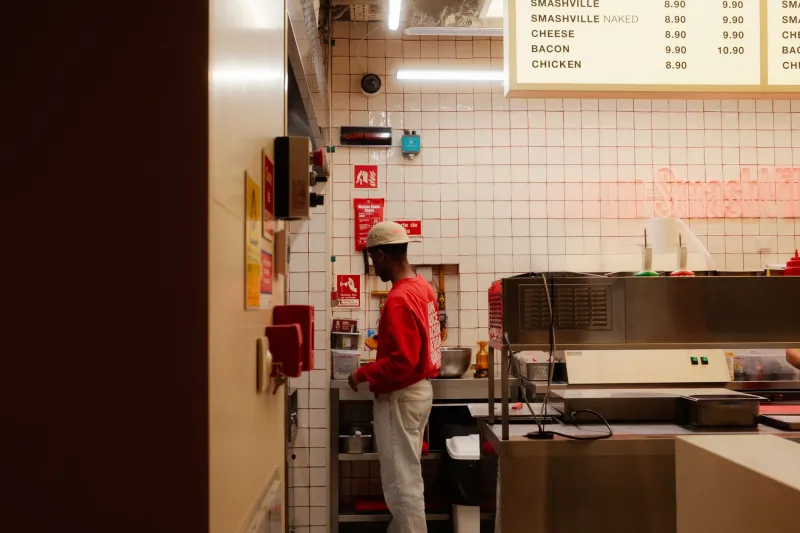
Food writing tends toward the communal. The long table. The shared platter. The feast that binds strangers into temporary family. These images are powerful precisely because they are true—eating together is one of the oldest and most durable human rituals. Yet there is another meal, quieter and more philosophically complex, that most food writers pass over: the meal eaten alone.
How a society treats the solitary diner—the architecture it builds around them, the dishes it designs for them, the social meaning it assigns to their solitude—is one of the most honest measures of what that society believes about individuality, community, and the relationship between the two. A journey through five distinct dining cultures reveals that the table for one is never really just about food.
Japan: The Ramen Counter as a Room of One's Own
The ichiran ramen experience—pioneered by the Fukuoka-based chain of the same name and now replicated in solo-dining establishments across Japan—is one of the most deliberately engineered solitary eating environments in the world. Diners enter individual wooden booths separated by partitions, face a narrow counter, and order via a laminated form slipped under a bamboo curtain. Food arrives through a small window. No server makes eye contact. No neighboring diner intrudes.
For American visitors who encounter this format for the first time, the initial reaction is frequently discomfort. The design reads, through a Western lens, as isolating—even antisocial. But this interpretation misses the cultural logic entirely. In Japanese aesthetic philosophy, particularly as it relates to the concept of ma (the productive value of empty space and silence), the solo dining booth is not a deprivation chamber but a gift. It offers the diner complete permission to be present with the bowl in front of them—to attend to the temperature of the broth, the resistance of the noodle, the slow release of the chashu pork—without the social obligation of conversation.
Food anthropologist Emiko Ohnuki-Tierney, in her landmark study of rice and Japanese identity, argued that Japanese food culture has always been oriented toward a kind of focused, reverent engagement with ingredients. The solo ramen counter is that philosophy made architectural. It does not ask whether you have someone to eat with. It asks whether you are paying attention.
Norway: Eating Alone as a Declaration of Self-Possession
Scandinavian cultures—and Norwegian culture in particular—have long maintained a social framework that treats solitude not as loneliness but as a legitimate and even valued state of being. This orientation has a specific name in Norwegian: alene carries none of the melancholy associations that the English word "alone" tends to accumulate. It is simply a condition, neutral and sometimes preferred.
This cultural positioning shows up in Norwegian dining customs in subtle but telling ways. The matpakke—the traditional packed lunch of open-faced sandwiches wrapped in wax paper and eaten at one's desk or on a park bench—is a national institution that has resisted the European trend toward communal workplace lunches with remarkable stubbornness. Norwegians eat their matpakke alone, quickly, and without apparent self-consciousness. The meal is functional, personal, and entirely their own.
What the matpakke tradition reveals is a society that does not require the legitimizing presence of others to make an activity meaningful. The meal does not need an audience. Eating alone in Norway is not a social failure—it is an exercise in autonomy, a small daily act of self-determination that reflects broader Scandinavian values around personal independence and the right to one's own inner life.
China: The Solo Diner and the Tension of the Communal Table
Chinese dining culture is, at its structural core, designed for groups. The round table with the spinning lazy Susan at its center is not merely a practical arrangement—it is a physical expression of a Confucian social ethic in which the individual is understood primarily in relation to others. Dishes are ordered collectively, shared without individual portion logic, and eaten in a choreography of mutual deference and generosity.
Within this context, the solo diner occupies an uncomfortable position. In many traditional Chinese restaurants—particularly in older urban neighborhoods in cities like Chengdu, Guangzhou, or Xi'an—a single person arriving for dinner may be quietly steered toward a smaller side table, offered a simplified menu, or simply regarded with mild puzzlement. The meal is not designed for one, and the architecture of the dining room reflects this.
Yet contemporary China is producing a counter-narrative. The rapid growth of urban single-person households—particularly among young professionals in cities like Shanghai and Beijing—has generated a new category of restaurant explicitly designed for solo diners: small-format eateries with counter seating, single-serve hot pot burners, and menus calibrated for one. This shift is not merely commercial. It represents a genuine negotiation between a deeply collectivist food culture and an emerging generation that is, for the first time, eating its way toward a new kind of individualism.
Ethiopia: When Eating Alone Is a Moral Statement
In Ethiopian dining tradition, the act of eating alone carries a specific social weight that most Western visitors find striking. The concept of gursha—the practice of hand-feeding a companion a morsel of food as an act of love and connection—is so central to Ethiopian communal eating that its absence transforms the meal into something qualitatively different. To eat alone in this context is not simply a logistical circumstance. It is, in a cultural sense, a diminished state.
This is not a judgment about the individual diner's social worth. Rather, it reflects an Ethiopian worldview in which the meal is understood as inherently relational—an event that exists between people rather than for a person. The injera, the large sourdough flatbread that serves as both plate and utensil, is designed to be shared. Its circumference implies a gathering. To eat from it alone is to use a communal object in a private way, and the mild dissonance of that act is culturally legible.
For American travelers dining in Ethiopian restaurants in cities like Washington, D.C.—home to one of the largest Ethiopian diaspora communities in the world—the gursha tradition offers a particularly intimate point of entry into a food culture that encodes its deepest values about human connection directly into the mechanics of the meal.
Spain: The Vermut Hour and the Art of Being Alone Together
Spanish food culture offers perhaps the most nuanced position on solitary dining of any in this survey, because it refuses the binary entirely. The late-morning vermut hour—a pre-lunch ritual of vermouth, olives, and small bites consumed at a bar counter in cities from Barcelona to Seville—is an experience that is simultaneously solitary and communal, and the distinction is never entirely resolved.
A person standing at a Spanish bar counter during the vermut hour is technically alone. They have not arrived with companions. They are not engaged in sustained conversation. Yet they are entirely embedded in a social fabric—overhearing fragments of other conversations, exchanging nods with the bartender, sharing the ambient warmth of a room full of people engaged in the same ritual. This is what Spanish sociologists sometimes call estar sin estar—being there without quite being there.
The genius of the vermut tradition is that it makes no demand. It neither requires the solo diner to perform sociability nor condemns them to isolation. It simply makes a space in which solitude and community can coexist without either one winning. For a culture that places enormous value on both family and personal pleasure, this is not a compromise—it is a philosophy.
What the Empty Seat Reveals
Taken together, these five dining cultures suggest that the solo meal is never really about eating. It is about what a society believes the individual is owed—privacy, connection, presence, autonomy, or belonging. The table for one is a mirror. What it reflects depends entirely on who built the room around it.