Neither Visitor Nor Native: What Five Americans Who Never Came Home Discovered About Belonging

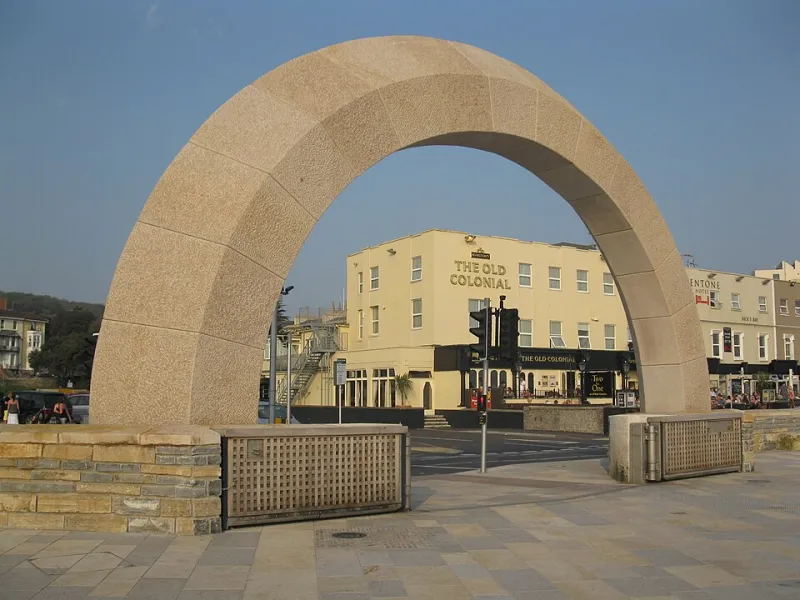
Photo: Houdzkal, CC BY-SA 4.0, via Wikimedia Commons
There is a particular kind of American traveler who arrives somewhere with a return ticket and eventually stops needing it. The decision is rarely dramatic. It accumulates: a job that extends, a relationship that deepens, a neighborhood that begins to feel like a neighborhood rather than a backdrop. And then one day—sometimes years later—the person realizes they have not lived in the United States for long enough that returning would itself feel like emigration.
The Five Continents Project spoke at length with five such people. They live on four different continents. Their reasons for staying are as varied as their destinations. What they share is an unusually clear-eyed perspective on what belonging actually requires—and what it costs—when you are building it somewhere you were not born.
Lisbon, Portugal: The Bureaucracy of Being Wanted
Cara left Chicago for Lisbon in 2019, initially for three months. She is still there.
"I keep telling people it was the light," she says, laughing. "Which is true, but it's also a convenient answer that doesn't require me to explain the other things."
The other things include a job in UX design that transitioned fully remote during the pandemic, a Portuguese partner she met in her second year, and a growing discomfort with aspects of American life—the healthcare system, the cost of urban housing, a generalized exhaustion she struggled to name—that made returning feel less like homecoming and more like re-enrollment in something she had quietly withdrawn from.
Portugal's D7 visa, designed for passive income earners and remote workers, gave her a legal pathway. But the visa, she is careful to note, is not the same as acceptance. "The bureaucracy here is its own adventure," she says. "Patient is not a word I would have used to describe myself before I moved here. I would use it now."
What Cara has learned about belonging is that it is constructed incrementally and cannot be rushed. She knows her neighborhood's rhythms—which bakery opens first, which neighbors will stop to talk, which streets flood in November. She does not speak Portuguese fluently, and she is honest about how much that costs her. "There is always a layer of the place I can't reach," she says. "I've made peace with that, mostly."
Oaxaca, Mexico: The Disillusionment Nobody Mentions
Travis moved to Oaxaca from Austin in 2017, drawn by the food culture, the cost of living, and what he describes as "a fantasy version of slowness" he had constructed from travel essays and food documentaries.
"I arrived expecting magic," he says. "And Oaxaca is genuinely extraordinary. But it's also a real place with real problems, and at some point you have to decide whether you're going to engage with those problems or just keep treating the city as your personal aesthetic experience."
The disillusionment Travis describes is not with Oaxaca itself but with the version of himself he brought to it. The expatriate community he initially gravitated toward—largely American and European, largely insulated from the economic realities facing Oaxacan residents—began to feel, over time, like a prolonged form of tourism masquerading as residency.
He has since learned Spanish to a level of genuine fluency, developed professional relationships with local artisans through a small import business, and become, he believes, a more honest participant in the city's life. He is also clear-eyed about the limits of that participation. "I pay rent here, I pay taxes here, I hire people here," he says. "But I can also leave whenever I want. Most of the people I know here cannot. That asymmetry doesn't go away."
Nairobi, Kenya: Building a Life Without a Template
Danielle moved to Nairobi in 2014 for a two-year posting with an international development organization. Ten years later, she runs her own consultancy and has two children enrolled in Kenyan schools.
"There was no moment where I decided to stay," she says. "There were just a series of moments where leaving didn't make sense."
For Danielle, the experience of long-term residence in Kenya has been shaped above all by the question of how she is perceived. She is Black and American, which means her experience of Nairobi is categorically different from that of white expatriates in the same city—and also different from that of Kenyan citizens, who read her accent and mannerisms as distinctly American regardless of how many years she has lived there.
"I occupy a specific lane," she says. "Not foreign in the way a white European is foreign. Not Kenyan in the way my neighbors are Kenyan. Something else. I've stopped trying to resolve it."
Her children, she notes, are navigating their own version of this ambiguity. Born in Nairobi, raised in Nairobi, holding American passports, educated in Kenyan schools—they are, she says, "their own category entirely."
Chiang Mai, Thailand: The Language That Changed Everything
Peter arrived in Chiang Mai from Portland in 2011, initially to teach English. He has since learned Thai to an advanced level—an achievement that, he argues, fundamentally altered his experience of the country and his relationship to the question of belonging.
"Before I spoke Thai, I was a visitor with a long lease," he says. "After I spoke Thai, I became someone who could actually be in relationship with the place. Not a native—I'll never be that—but not just a consumer of it either."
The language acquisition, he is quick to note, took years and required a degree of sustained effort that he underestimated at the outset. It also required him to be genuinely bad at something for an extended period, which he found humbling in ways that he now considers essential to the experience of living abroad honestly.
Thailand's visa system for long-term foreign residents remains complicated, and Peter has navigated it with the particular combination of patience and low-grade anxiety that characterizes the lives of most long-term expatriates in countries without straightforward permanent residency pathways. "Every year there is a moment where I think: what if this doesn't work out?" he says. "That uncertainty is the tax you pay for the life."
Berlin, Germany: Love as Immigration Policy
Sophia moved to Berlin from New York in 2016 for a German woman she had met at a conference in Amsterdam. The relationship lasted three years. Sophia has been in Berlin for eight.
"People always ask if I stayed for her," she says. "I stayed because of her—she's why I came—but I stayed for the city. Those are different things."
Sophia's account of long-term residence in Germany is shaped by the experience of navigating a country that is, in her description, simultaneously welcoming and opaque. German bureaucracy is legendary, and her early years involved a level of administrative complexity that she found genuinely destabilizing. Learning German—she is now conversationally fluent—helped, but did not dissolve what she describes as the essential strangeness of being American in a country with a very different relationship to history, public life, and the concept of community.
"Americans are trained to perform friendliness," she says. "Germans are not. I spent two years thinking people didn't like me. Eventually I understood that the baseline is different. Neither is wrong. But you have to recalibrate."
The Space Between
What these five accounts share is a refusal of the tidy narratives that usually attach themselves to stories of Americans living abroad—neither the triumphant expat finding themselves in an exotic locale, nor the cautionary tale of someone who lost their way. The reality, as each of these individuals describes it, is considerably more textured: a life assembled from visa renewals and language lessons, from moments of genuine connection and persistent low-level foreignness, from the slow accumulation of local knowledge and the permanent awareness that another kind of life remains available, back in a country that still holds a passport for you.
Belonging, these five voices suggest, is not a destination. It is a practice—imperfect, ongoing, and never quite finished.